Static Mixers – Selection and Design for Adhesive and Sealant Applications
The static mixer is a central element in the process chain of any 2K adhesive and sealant dosing system. In many cases, the tip of the static mixer serves directly as the nozzle – making the mixer often the last link before application. Even when the dosing system and mixing ratio are working flawlessly, it is the mixing quality that ultimately determines the result at the bond line. In practice, however, the importance of mixer selection and design is frequently underestimated.
This article explains which factors are truly decisive when selecting and designing static mixers for dosing systems, and why the wrong mixer can lead to faulty results despite a correct mixing ratio.
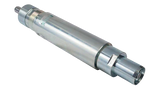
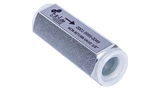
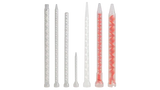
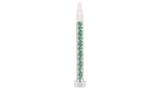
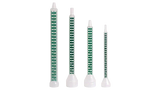
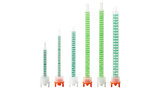
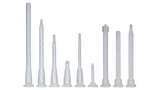
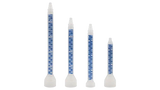
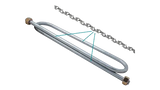
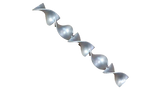
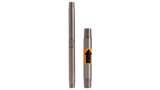
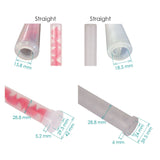
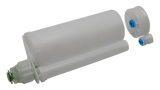
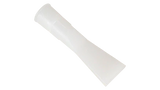
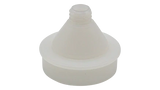
Figure: Various static mixers at a glance
The figure shows different static mixers – from disposable plastic mixers with various geometries to individual mixing elements. Depending on the application, mixing ratio and viscosity, different designs and element counts are used.

The role of the static mixer
The static mixer has one clearly defined task: it must blend the two components of a 2K adhesive or sealant to produce a homogeneous, uniformly mixed material structure. Only then can the chemical reaction between resin and hardener proceed fully and evenly.
Poorly mixed material typically manifests in practice through:
– uneven curing
– streaks or soft spots in the adhesive
– reduced mechanical strength
– insufficient sealing performance
These effects often only become apparent after application and are then difficult to trace back definitively to mixing quality.
Cartridge mixers vs. machine mixers – an important distinction
Before discussing mixer selection in detail, a fundamental distinction is necessary:
Cartridge mixers are used in combination with 2K cartridges and cartridge guns. In practice, these mixers are already pre-qualified and specified by the material manufacturers. The user follows the adhesive manufacturer's recommendation and uses the designated mixer. There is generally no need for individual mixer design. Cartridge mixers frequently use Quadro geometries.
Machine mixers are used on dosing systems and operate under significantly higher pressures. Here, material manufacturers rarely specify a particular static mixer. Instead, the mixer must be individually matched to the specific application – even when using the same adhesives and sealants. This is because the design depends not only on the material, but critically on the process parameters of the specific application.
This article focuses on the selection and design of machine mixers for dosing systems.
Factors that determine mixer selection
Selecting the right static mixer for a dosing system depends on several parameters that must be considered together. Each individual factor can significantly influence the design – blanket simplification is therefore not possible.
– Mixing ratio: The mixing ratio affects how many mixing elements are required and which geometry should be used. The design is not only challenging with asymmetric ratios such as 10:1 – even at 1:1, the combination of viscosity, flow rate and pot life can require careful matching of diameter, length and element count. Why the set mixing ratio alone does not guarantee actual mixing quality is explained in detail in our article Mixing ratio in 2K adhesives and sealants.
– Component viscosity: Viscosity affects flow behaviour within the mixer. Not only high-viscosity materials are challenging – low-viscosity materials can also require special mixer design due to their flow characteristics. Large viscosity differences between the A and B components place additional demands on the geometry.
– Output rate and flow rate: This is a particularly relevant factor in practice. The same adhesive or sealant may require a different mixer on a low-output system than on a high-output system. The mixer must be dimensioned to achieve a sufficient mixing effect at the intended flow rate without generating excessive back pressure.
– Dosing technology: The dosing technology used also has a direct influence on mixer selection. With gear pump dosing technology, the material flow is more precise and consistent, which promotes more uniform mixing. This allows significantly shorter static mixers to be used compared to piston dosing technology, which inherently generates pressure fluctuations at the reversal points and therefore requires longer mixing paths. The differences between both dosing technologies are explained in detail in our article Gear pump or piston dosing technology.
– Mixer geometry: Different mixing element designs – e.g. helical, Quadro or grid structures – create different flow patterns and different levels of back pressure. The choice of geometry directly affects mixing quality, pressure drop and dead volume.
– Pot life of the material: Materials with very short pot life require special attention. Even in continuous production processes, the static mixer must be regularly flushed and refilled before the pot life expires, to prevent the material from curing inside the mixer and causing a blockage.
Helical mixers as the standard for dosing systems
In practice, helical mixers are predominantly used on dosing systems. Helical mixers work with spiral elements that alternately split and redirect the material. They offer a good balance between mixing quality and back pressure and are designed for the typical pressure conditions on dosing systems.
Quadro mixers and X-Grid mixers generate more splitting and redirection steps per element and thus achieve higher mixing intensity in a shorter length. However, due to the structure of their mixing elements, they generate significantly higher back pressure. On dosing systems, they therefore often cannot be used. An exception are very low-viscosity and liquid materials, where back pressure remains within an acceptable range despite the intensive mixer geometry.
For most dosing applications with paste-like adhesives and sealants, the helical mixer is therefore the appropriate choice.
The principle: maximum mixing quality with minimum volume
A frequently underestimated aspect of mixer design is the dead volume of the mixer. As a general rule – regardless of the material's pot life: the static mixer must be selected to reliably deliver the required mixing quality, while having as little volume as possible.
Why does this matter? Between individual applications, the static mixer is flushed with the mixed 2K material and refilled before the pot life expires, so that the reaction inside the mixer starts over. The larger the mixer volume, the higher the material consumption with each flush cycle. Over the course of production, these losses can significantly impact material costs.
The design is therefore always an optimum: enough mixing elements and diameter for complete blending, but no more than necessary.
What happens when the mixer is incorrectly designed
Errors in mixer selection are among the underestimated sources of failure in 2K dosing processes. Typical scenarios:
– Too few mixing elements: The components are not fully blended. The chemical reaction proceeds unevenly, resulting in streaks, soft spots or insufficient strength.
– Too large a mixer diameter or too many elements: Dead volume increases unnecessarily, leading to higher flushing losses. At the same time, a diameter that is too large can result in insufficient back pressure – which also leads to poorer mixing.
– Too small a mixer diameter: Back pressure increases, which can affect dosing accuracy and put strain on the pumps.
– Wrong geometry: A Quadro mixer or X-Grid mixer on a dosing system with paste-like materials generates too much back pressure and can negatively affect the dosing process.
Mixer testing and qualification of new materials
As an independent and neutral machine builder, we work with leading material manufacturers to conduct tests with newly developed adhesives and sealants on our 2K dosing systems. The aim of these tests is to evaluate suitable static mixers and qualify them for the respective application.
We support all material manufacturers equally – regardless of brand or manufacturer. Our focus is solely on achieving the best possible process reliability for the end user.
Are you a material manufacturer developing new 2K adhesives or sealants?
We offer to test your new materials on our dosing systems and jointly qualify the right static mixer. Contact us for a non-binding discussion.
Our recommendation for mixer selection on dosing systems
The right mixer selection cannot be made using tables or rules of thumb alone. It results from the interplay of mixing ratio, viscosity, output rate, dosing technology, pot life and application type.
From our experience, the following points are particularly important in practice:
– every application requires an individual assessment of all influencing factors
– gear pump dosing technology enables shorter mixers than piston dosing technology
– dead volume should generally be kept as low as possible
– when different output rates are used on the same system, the mixer must be suitable for the entire performance range
– the goal is always: achieving the required mixing quality with the smallest possible mixer volume
Related product categories
All static mixers at a glance
STATOMIX ME Series (medmix)
STATOMIX MS Series (medmix)
Static mixers Nordson Series 160/161
Static mixers Nordson Series 162A
Summary
The static mixer determines mixing quality and thus directly affects the properties of the adhesive or sealant bond. On dosing systems – unlike cartridge applications – there are generally no predefined mixers specified by material manufacturers. The design must be individually matched to mixing ratio, viscosity, output rate, dosing technology and pot life. The principle: as much mixing performance as needed, as little mixer volume as possible. A correct mixing ratio alone does not guarantee a good result – only in combination with a properly designed mixer is the 2K process fully secured. How process reliability can be further enhanced through real measured values is explained in our article Volume measurement cells in 2K dosing applications.
Individual consultation
Do you need support with mixer selection or would you like to check whether your current mixer is optimally suited to your application?
Contact us