Mixing ratio in 2K adhesives and sealants
The mixing ratio is one of the most critical parameters in the entire dispensing process for 2K adhesives and sealants. In theory, it is clearly defined, properly described in the data sheet, and correctly stored in the control system. In practice, however, theory and reality often diverge.
This article explains why a correctly set mixing ratio alone is not sufficient and why stable 2K processes can only be achieved reliably through real process evaluation.
Typical mixing ratios in practice
In practical applications with 2K adhesives and sealants, mixing ratios typically range from 1:1 to 100:2. Depending on the material and the application, all intermediate ratios are possible.
The dispensing system must not only be able to represent this mixing ratio, but also maintain it consistently throughout the entire process.
How mixing ratios are set
Depending on the machine type, the mixing ratio is set in different ways:
– via the touch panel and control system, for example on the mastermix gear drive
– via mechanical settings, for example on the mastermix XS
In both cases, a target condition is defined first. Whether this target condition is actually maintained during operation depends on the real conveying conditions.
What happens in practice
In real production environments, numerous factors influence the dispensing process:
– changes in material temperature
– viscosity fluctuations during operation
– different material batches
– downtimes and start-stop cycles
– varying application speeds
All of these factors affect the actual volume dispensed for each component and therefore the real mixing ratio.
Typical misconceptions in 2K dispensing
In practice, we repeatedly encounter similar assumptions:
– “The system has been set correctly once.”
– “The mixing ratio remains constant.”
– “The material always behaves the same.”
Without continuous monitoring, changes in the mixing ratio during operation often go unnoticed.
Consequences in the component
Deviations in the mixing ratio have a direct impact on the properties of the applied material. Typical consequences include:
– reduced mechanical strength of the adhesive bond
– incomplete or faulty crosslinking
– reduced durability
– sealing performance not achieved or deteriorating over time
These effects often only become apparent later in service or under load. At that point, the root cause can often no longer be clearly traced back to the dispensing process.
Why theory alone is not sufficient
A theoretically correct mixing ratio only describes the target condition. Without measurement or regular verification of the actually dispensed volume, it remains unclear whether this target condition is truly being met.
Stable 2K processes therefore require more than correctly set parameters.
What really helps in practice
Based on our experience, process reliability in 2K applications can be improved in two ways:
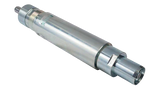
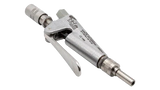
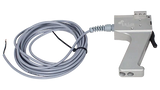
– through continuous monitoring, for example using volume measuring cells or stroke measurement systems
– or, if these are not available, through regular manual checks
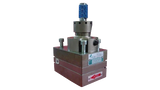
If no permanent monitoring is in place, we recommend regularly checking the mixing ratio using a manual calibration unit.
Additional quality checks also help to ensure process stability, for example:
– pot life tests
– butterfly tests
These tests help to detect changes in material behavior at an early stage and allow corrective action to be taken.
Figure: Manual mixing ratio check using the calibration unit
The figure shows a manual verification of the mixing ratio for 2K adhesives and sealants using a calibration unit. The two components are dispensed separately to compare the actually dispensed volumes. This procedure is particularly recommended when no continuous monitoring via volume measuring cells or stroke measurement systems is available.

Summary
The mixing ratio for 2K adhesives and sealants is clearly defined in theory, but is subject to numerous influencing factors in practice. Without monitoring or regular verification, there is a risk that the real mixing ratio will change unnoticed.
Anyone aiming to achieve permanently stable and reproducible 2K processes should consistently combine theory, technology, and regular quality checks.
Individual quotation
Would you like to design or safeguard your 2K dispensing application in a technically sound way?
Request an individual quotation here