Mixing Technology
Static or Dynamic for Optimal Results
Choosing the right mixing technology is crucial for the quality of the end result when processing 2C adhesives and sealants. It is essential that mixing and metering technology are perfectly matched.
The choice of mixing principle depends on material properties, process requirements and the desired level of automation – the direct comparison below shows the differences.
Static or Dynamic?
The direct comparison shows which mixing principle fits your material and process.
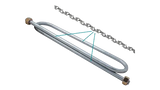
Static Mixers
Disposable mixers for most 2C applications
- Operating principle
- Mixing elements in the flow channel – no moving parts
- Use case
- Also suitable for viscosity differences – provided metering is precise and the mixer is properly dimensioned
- Mixing result
- Homogeneous with the right mixer selection
- Maintenance & cost efficiency
- Disposable – no cleaning or maintenance effort, significantly easier to maintain
- Typical use
- Standard applications, manual and automated
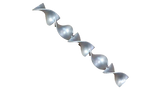
Dynamic Mixers
Rotating mixing element for demanding material pairings
- Operating principle
- Rotating mixing element, driven by the system
- Use case
- Strongly differing viscosities, e.g. liquid + pasty
- Mixing result
- Homogeneous and bubble-free even with difficult material pairings
- Maintenance & cost efficiency
- Higher technical effort – mixing element must be cleaned and maintained
- Typical use
- 2C applications with high demands on mixing quality
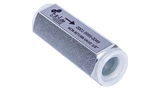
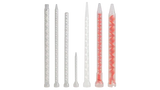
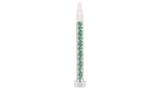
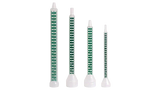
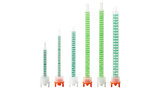
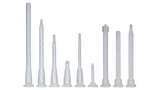
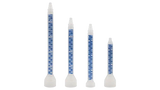
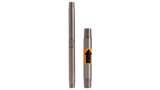
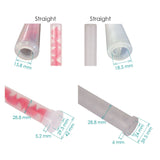
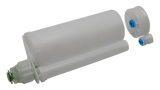
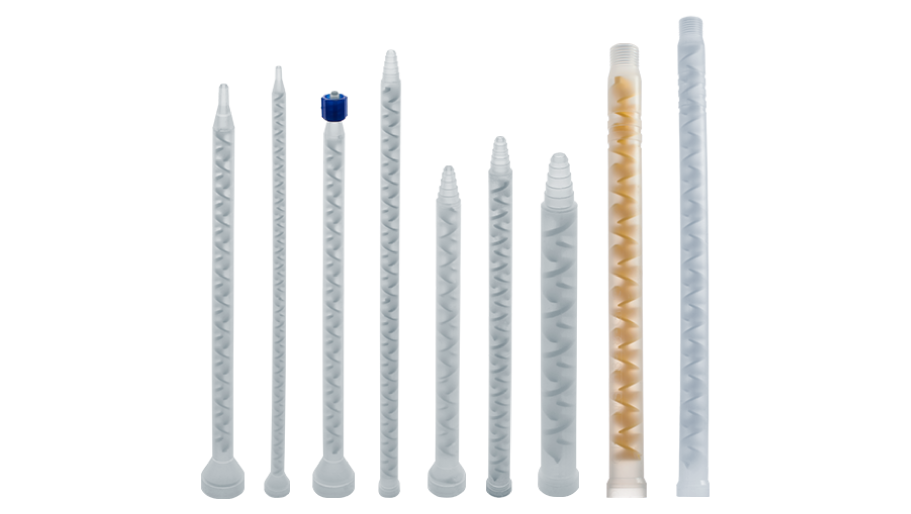
Static Mixers in the Shop
Static mixers for all common cartridge systems and metering systems.
Which mixer fits your material?
Our application engineers advise you directly from our production facility in Waldmohr.